

 Dara Correia
 In today’s era of accelerated digital transformation, businesses face a common challenge: aligning their sales processes with customers’ new expectations—personalized experiences, instant responses, and consistent interactions across all touchpoints. In this scenario, Customer Relationship Management (CRM) systems become indispensable allies. Among the various options available on the market, Zoho CRM has been standing out as a robust, accessible, and highly adaptable platform tailored to the needs of small and medium-sized businesses.
More than just a tool to store contacts, Zoho CRM offers a complete suite of features aimed at increasing sales force efficiency and growth. From automating repetitive tasks to integrating with email, WhatsApp, and ERP tools, along with real-time dashboards and artificial intelligence, this solution covers every stage of the sales cycle. Additionally, its flexibility allows it to adapt to different business models and organizational structures without requiring extensive technical resources.
This article presents, in a practical and detailed way, the Zoho CRM features that have the greatest impact on a company’s commercial strategy. Each section highlights how technology can be used to enhance results, improve sales team productivity, shorten the average sales cycle, and increase customer satisfaction. Based on real features, recent platform updates, and implementation best practices, this content is intended for managers, salespeople, and decision-makers looking for a CRM solution that combines simplicity, innovation, and real-world results.

1. 360º Customer View

Having a complete view of the customer is no longer a luxury—it has become a necessity. For the sales team to make fast and personalized decisions, it is crucial to access the full history of interactions, preferences, financial data, and customer pain points—all in one place. Zoho CRM makes this possible by centralizing real-time information and offering a complete and integrated perspective of each contact or company. This approach boosts productivity, improves the customer experience, and strengthens business relationships.
Complete history and real-time context
Each record in Zoho CRM stores much more than just contact data: it includes phone calls, emails, meetings, internal notes, sent proposals, support tickets, and billing information. The sales team no longer depends on multiple systems or colleagues’ memory to access a customer’s history. This reduces communication failures, improves cross-departmental alignment, and speeds up sales and retention processes.
Unified data and cross-team collaboration
The 360º customer view enables everyone—from marketing to sales, through to after-sales and support—to work from the same information base. Time wasted on duplicate updates, incomplete data, or misinterpretation is eliminated. The customer feels recognized, respected, and well accompanied—even when interacting with different team members. This consistency builds trust and helps differentiate the company in a highly competitive market.
Direct impact on personalization and retention
With all data centralized, Zoho CRM makes it easier to create personalized and relevant approaches at every stage of the sales funnel. The information gathered over time can be used to identify upsell opportunities or anticipate customer needs. Instead of generic campaigns, companies can tailor messaging, content, and channels to each customer’s profile—significantly increasing conversion and loyalty rates.
How to use a CRM Software to sale more?
2. Sales Task Automation

Sales teams spend a significant portion of their time on administrative tasks: sending follow-up emails, updating statuses, organizing contacts, or scheduling meetings. These actions, although important, do not directly generate commercial value. Automation solves this problem by freeing salespeople from repetitive tasks, allowing them to focus on what matters most: closing deals. Zoho CRM offers a robust task automation system with no coding required.
Custom workflows with conditional logic
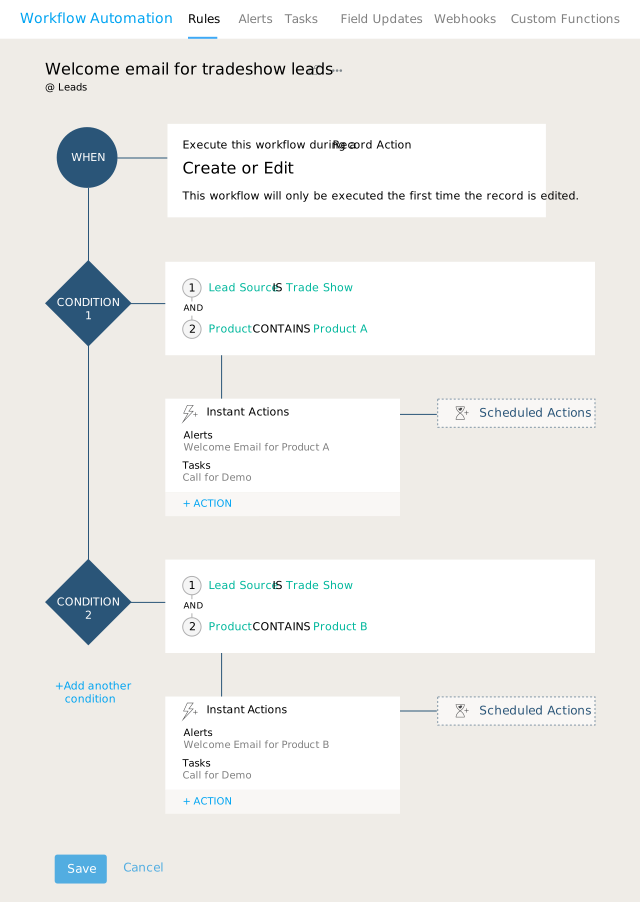
Through Workflows, it is possible to create rules that automatically execute actions when certain conditions are met. For example, whenever a lead is assigned to a salesperson, the system can send a welcome email, create a follow-up task, and add the contact to a nurturing campaign. These automations not only speed up the response process but also ensure consistent communication. Conditional logic allows complex branching, adapting the system’s behavior to each lead’s profile.
Smart follow-up for leads and opportunities
Zoho CRM allows you to configure automatic reminders for inactive leads, alerts for opportunities at risk, or even generate tasks based on behavior (such as email opens or lack of response). With these features, salespeople avoid missing opportunities and can maintain a healthy and active pipeline. The system also automates the initial qualification of contacts, passing only the most promising leads to the sales team.
Reduced human error and increased productivity
Automating tasks reduces the risk of human error, prevents oversights, and ensures all leads receive the minimum necessary attention. Additionally, salespeople gain time to better prepare for meetings, prospect strategically, and build stronger relationships. The result is increased individual and team productivity, leading to more deals closed in less time.
3. Intelligent Lead Scoring

Not all leads have the same value, and treating them equally can mean wasting time and resources on low-conversion contacts. Lead scoring—the system that ranks leads based on their behavior and profile—allows the sales team to work with focus and strategy. Zoho CRM offers a configurable and accessible lead scoring engine aligned with the needs of modern sales teams.
Scoring based on business rules
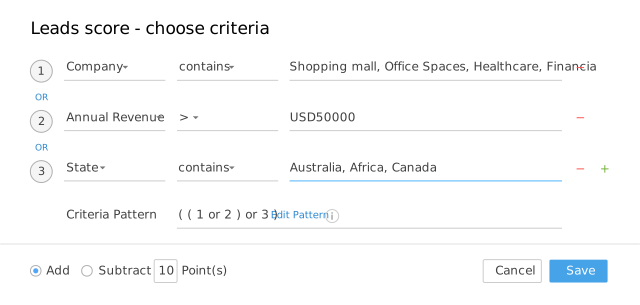
You can assign positive or negative points to each lead based on variables such as industry, job title, campaign engagement, lead source, website visits, or specific actions (like email clicks or content downloads). Based on the accumulated score, leads are automatically classified as “hot,” “warm,” or “cold,” allowing the team to focus on the contacts most likely to convert.
Ongoing strategy customization
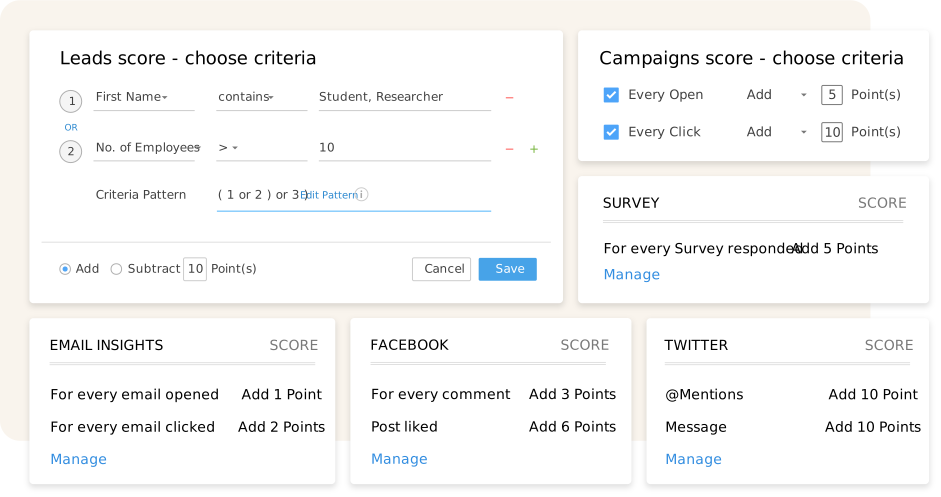
The scoring system can and should be adjusted over time, based on real conversion data. As success patterns are identified (for example, leads from the financial sector with certain interactions convert faster), the model can be refined. This iterative approach makes the sales strategy increasingly efficient and market-aligned. Furthermore, Zoho allows triggering automatic actions based on the assigned score, such as alerts or immediate lead assignment.
Practical advantages in the sales cycle
Lead scoring speeds up qualification, shortens the sales cycle, and increases conversion rates. By removing low-potential leads from the frontline, the team works with greater focus and efficiency. Instead of a uniform, generic approach, it is possible to offer a personalized experience at the right moment. The result? Less wasted effort and more deals closed with fewer attempts.
4. Integration with Essential Tools
In a world where data flows across multiple platforms, the ability to integrate systems becomes critical. A CRM that operates in isolation loses effectiveness and limits the potential of the commercial strategy. Zoho CRM stands out for its ease of integration with external tools and, most importantly, its synergy with the rest of the Zoho ecosystem. This connectivity enables a fluid operation, without information silos, and with full control over the sales funnel.
Integration with email and calendars

Zoho CRM integrates seamlessly with leading email services (Gmail, Outlook, Microsoft 365), allowing users to send, receive, and log messages directly on the contact record. Calendar synchronization simplifies meeting scheduling and ensures no appointment is missed. In terms of communication, integration with calling services is also a highlight, enabling direct phone calls from the CRM and automatic logging of call history, duration, and notes.
WhatsApp and social media as contact channels

With the growing importance of WhatsApp Business as a communication channel, Zoho offers integration with the official API, allowing users to send personalized messages, respond to inquiries, and log all interactions in the CRM. Social media is also covered through integration with Zoho Social, facilitating lead capture, campaign monitoring, and prompt responses to comments or direct messages.
Strategic advantage of the Zoho ecosystem
In addition to external integrations, Zoho CRM’s great strength lies in its native compatibility with other Zoho apps, such as Zoho Inventory (stock management), Zoho Desk (support), Zoho Campaigns (email marketing), or Zoho Projects (task management). This interconnection eliminates manual imports and exports, reduces errors, and provides a cohesive experience for the entire organization. The result is a more agile operation with decisions based on consistent and up-to-date data.
5. Real-Time Reports and Dashboards

Making decisions based on up-to-date data is essential to optimizing sales team performance and ensuring alignment with business goals. Zoho CRM includes an advanced reports and dashboards module that allows real-time data analysis in a visual and accessible way. This feature provides customizable and automated metrics, making it easier to monitor performance and identify improvement opportunities.
Performance metrics at your team’s fingertips
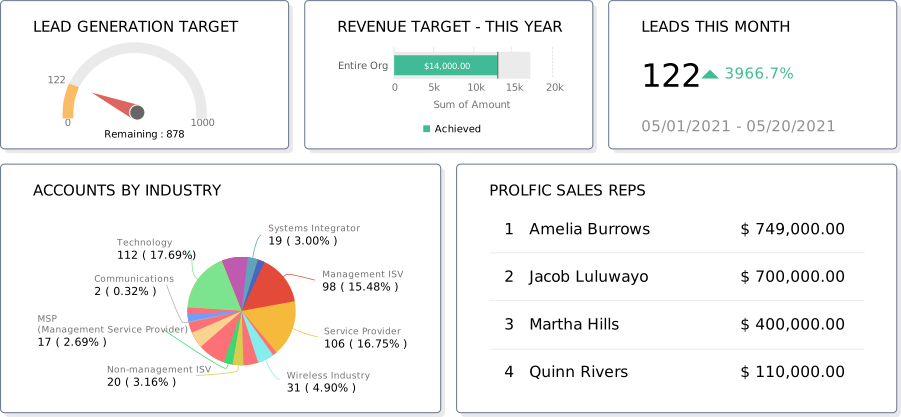
The system allows the creation of detailed reports on metrics such as volume of leads generated, conversion rate by channel, average time per funnel stage, performance by salesperson, among others. Reports can be updated in real-time or at set intervals, ensuring decision-makers always have access to the latest information. You can also schedule automatic report delivery via email to managers or teams, fostering a data-driven culture.
Customizable visual dashboards
Each user can configure personalized dashboards, selecting the most relevant charts and widgets for their role. Bar graphs, pie charts, funnels, progress indicators, or dynamic tables are available to build an intuitive visual panel. Dashboards can be shared with other team members or kept private, depending on access levels. In 2024, a dynamic filtering feature was introduced, allowing users to explore different scenarios directly within the dashboard without recreating reports.
Strategic decision-making support
With data that is up-to-date, visual, and contextualized, leadership can track trends, compare results over time, and proactively adjust strategies. Dashboards help identify bottlenecks in the sales process, measure campaign impact, and anticipate deviations from set goals. This integrated view enhances team agility and enables quick responses to business challenges or opportunities.
6. Zia – Zoho’s Artificial Intelligence Assistant
Artificial intelligence is no longer a futuristic feature—it is now a concrete tool supporting commercial management. Zia, Zoho CRM’s virtual assistant, uses machine learning to analyze behavior patterns, suggest actions, and predict outcomes with high accuracy. Natively integrated into the platform, Zia serves as a strategic ally in the daily work of salespeople and managers.
Data-based lead prediction and scoring
Based on interaction history and contact behavior, Zia automatically assigns a score to leads, indicating the likelihood of conversion. This scoring helps prioritize tasks and focus the team’s attention on the most promising opportunities. Zia also predicts the potential value of open opportunities, the likelihood of deal closure, and the average decision time, enabling more assertive pipeline management.
Next-best-action suggestions and sentiment analysis
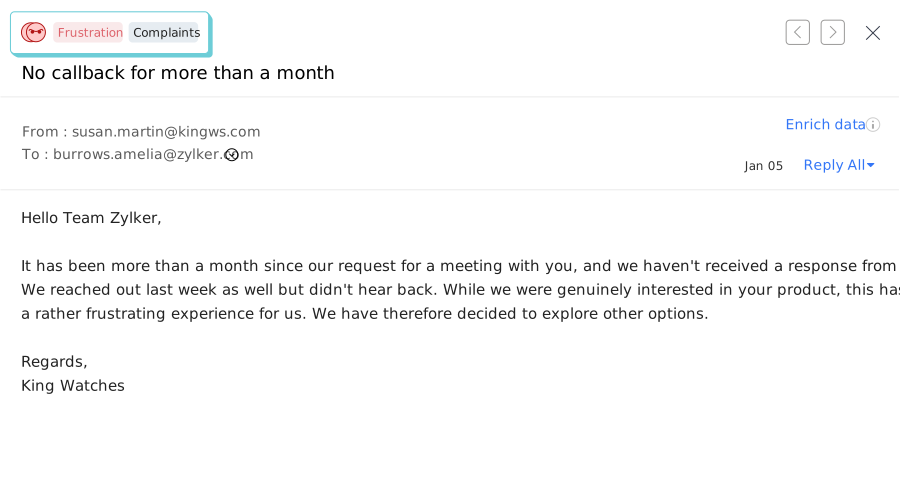
Another relevant feature is the suggestion of next actions based on recent customer behavior, such as no response, email clicks, or status changes. The system identifies patterns and automatically proposes tasks, such as reminders for a follow-up. In addition, Zia analyzes the sentiment of email communications, categorizing them as positive, neutral, or negative, and alerts the team to critical situations requiring special attention.
Intelligence serving productivity

These features, once reserved for highly technical systems or large enterprises, are now accessible to any organization. AI enables teams to anticipate challenges, adjust strategies in real time, and eliminate guesswork. Zia doesn’t replace human intelligence but enhances it with accurate analysis based on real data, optimizing overall sales team performance.
7. Pipeline Management and Sales Forecasting
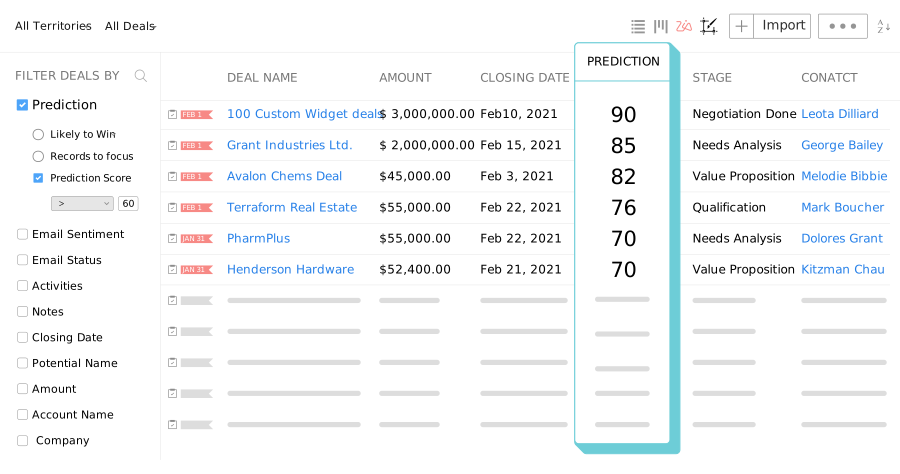
A well-structured pipeline is essential to maintaining control over the sales process, forecasting revenue, and ensuring no opportunity is lost. Zoho CRM provides visual and functional tools that facilitate pipeline management across different stages and the development of realistic sales forecasts. This functionality adapts to any business model and sales team structure.
Stage-based visualization with Kanban

Each pipeline can be visualized in a Kanban board, where deals appear as cards that move through stages (e.g., new lead, qualification, proposal sent, negotiation, closed). This visualization helps salespeople quickly and intuitively track their opportunity statuses. It is possible to configure multiple pipelines with different stages suitable for distinct services, market segments, or regions.
Revenue forecasting and sales targets
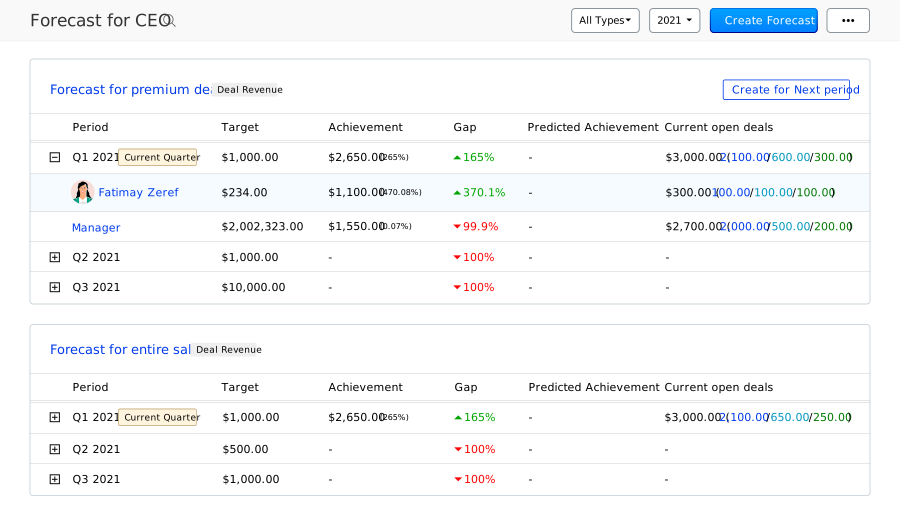
Based on conversion history and average values per stage, Zoho CRM allows you to create revenue forecasts that help define realistic targets. Forecasts can adjust automatically as the pipeline evolves, enabling users to track each salesperson’s or team’s progress toward monthly or quarterly goals. This information is also useful for financial management and organizational resource planning.
Real-time monitoring and deviation correction
Visual pipeline management, combined with automatic forecasts, allows quick identification of critical points—such as long-stagnant deals or stages with low conversion rates. This visibility helps managers act quickly, redirect efforts, and adjust strategies efficiently. The result is a more effective operation, focused on conversion and continuous growth.
8. Mobility and Mobile App
In a world where much of the commercial activity takes place outside the office, mobility is essential. Zoho CRM offers a complete mobile app designed for teams on the move who need constant access to their data and tasks. With offline capabilities, real-time activity logging, and automatic synchronization, the app ensures continuity and productivity anywhere.
Practical features for salespeople

The mobile app allows users to view contacts, log meetings, make calls, send emails, and update deals directly from their smartphone. The geo-referenced check-in system records the salesperson’s presence at the meeting location, automatically creating a visit log. Push notifications ensure that no follow-up is missed, even during travel between clients.
Offline access and automatic sync
In places without internet access, the app continues to function in offline mode, allowing users to consult data and log interactions. Once a connection is re-established, all changes are automatically synced with the CRM. This feature is especially useful for field teams or salespeople who frequently travel, ensuring continuity in customer engagement.
Direct impact on agility and efficiency
Mobility enables faster customer response, better meeting preparation, and immediate logging of relevant information. This reduces memory lapses, improves data quality in the CRM, and enhances the company’s professional image. The Zoho CRM app contributes to a more agile, connected, and customer-oriented operation.
9. Recent Improvements and New Features
Zoho CRM is constantly evolving, with frequent updates that improve usability, security, and intelligence. The features introduced between late 2023 and 2025 demonstrate the platform’s commitment to continuous innovation and meeting market needs.
Interface and customization
Significant improvements have been made to layout customization, conditional fields, and adaptive forms. These changes allow for more intuitive and relevant user experiences without needing developers. Teams can now configure customized views by profile, role, or department, improving usability and internal productivity.
Integrations and interoperability
Among the latest integrations is direct sync with Power BI and Google Sheets, allowing deeper data analysis and sharing across departments. Integration with marketing, HR, and accounting tools has also expanded, reinforcing Zoho’s role as the center of business operations.
Optimizations for hybrid teams
To support new ways of working, Zoho has added features for hybrid and remote teams, such as dynamic permissions, collaborative dashboards, and location-based access management. These updates make Zoho CRM an even more adaptable solution to today’s organizational reality, contributing to commercial teams’ flexibility and efficiency.
Conclusion
Digital transformation in sales is no longer a trend—it is a market requirement. In an era where differentiation increasingly depends on personalization, responsiveness, and intelligent information management, Zoho CRM positions itself as a complete, reliable, and scalable solution for sales teams that seek more than just a contact repository. Its vast array of features covers every stage of the funnel—from prospecting to retention—allowing you to automate what’s repetitive and personalize what’s strategic.
With tools like lead scoring, visual pipeline management, revenue forecasting, dynamic dashboards, and integration with channels like WhatsApp, email, and financial apps, Zoho CRM offers a 360º customer view essential for smarter decisions. Moreover, with Zia—the platform’s AI assistant—you can anticipate behaviors, prioritize opportunities, and identify success patterns based on real data. All of this comes in an intuitive interface, available in Portuguese, making adoption easier for commercial teams.
For companies that value efficiency, technology as a business enabler, and operational autonomy, Zoho CRM is clearly a strategic choice. Unlike complex systems that require constant consulting and major investments, Zoho offers a balance between functional depth and ease of use. That’s why, from Liminal’s perspective, this is one of the most powerful tools for accelerating commercial results—with fast ROI and sustainable growth. Transforming your sales strategy starts with choosing the right tools—and Zoho CRM is undoubtedly one of them.
Rely on Liminal’s CRM Experts
The world of Marketing and Technology is constantly evolving. It is increasingly important to count on specialists who can ensure the successful integration of innovation into your business. For technology to truly drive business success, a well-defined strategy is essential — one that guides the implementation, adoption, and evolution of systems.
As MarTech specialists, Liminal offers an integrated perspective that combines Technology, Marketing, and Strategy. We ensure successful adoption and implementation of marketing technologies — whether by helping you select the right systems for your company’s challenges, adapting processes and workflows within existing platforms, or developing a tailored CRM & Automation strategy that supports business growth.